A few years ago I was road tripping with my dog through the desert, heading west from Los Angeles to Texas. To pass the time, I popped on an audiobook: Sapiens by Yuval Noah Harari.
If you’ve ever traveled along this particular stretch of I-40 from SoCal into Arizona into New Mexico, you’ll understand me when I say this book matched the vibe of that drive. It’s a lot of flat desert, dinosaur statues, and signs to turn off and see a 50,000 year old meteor impact site.
And though it’s been years since I read it, I’ve been thinking about a particular passage from this book a lot lately:
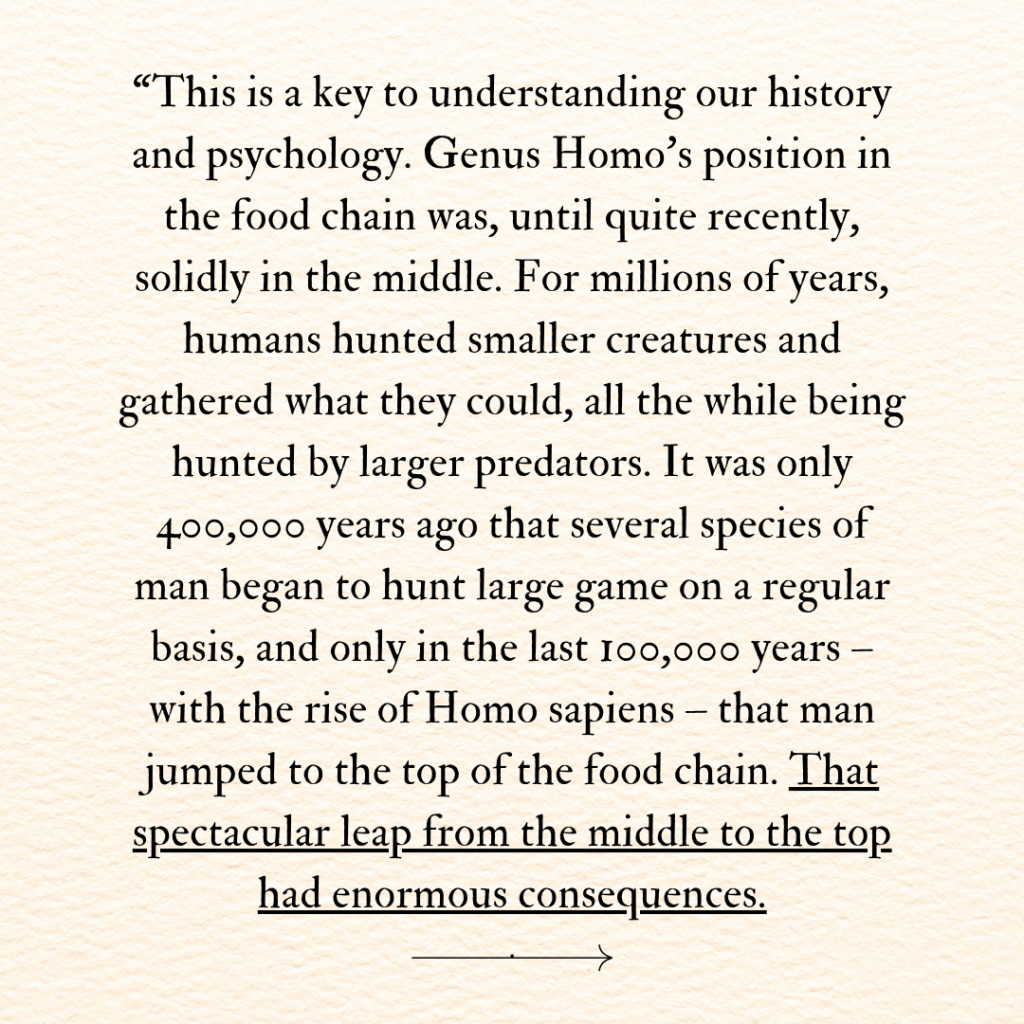
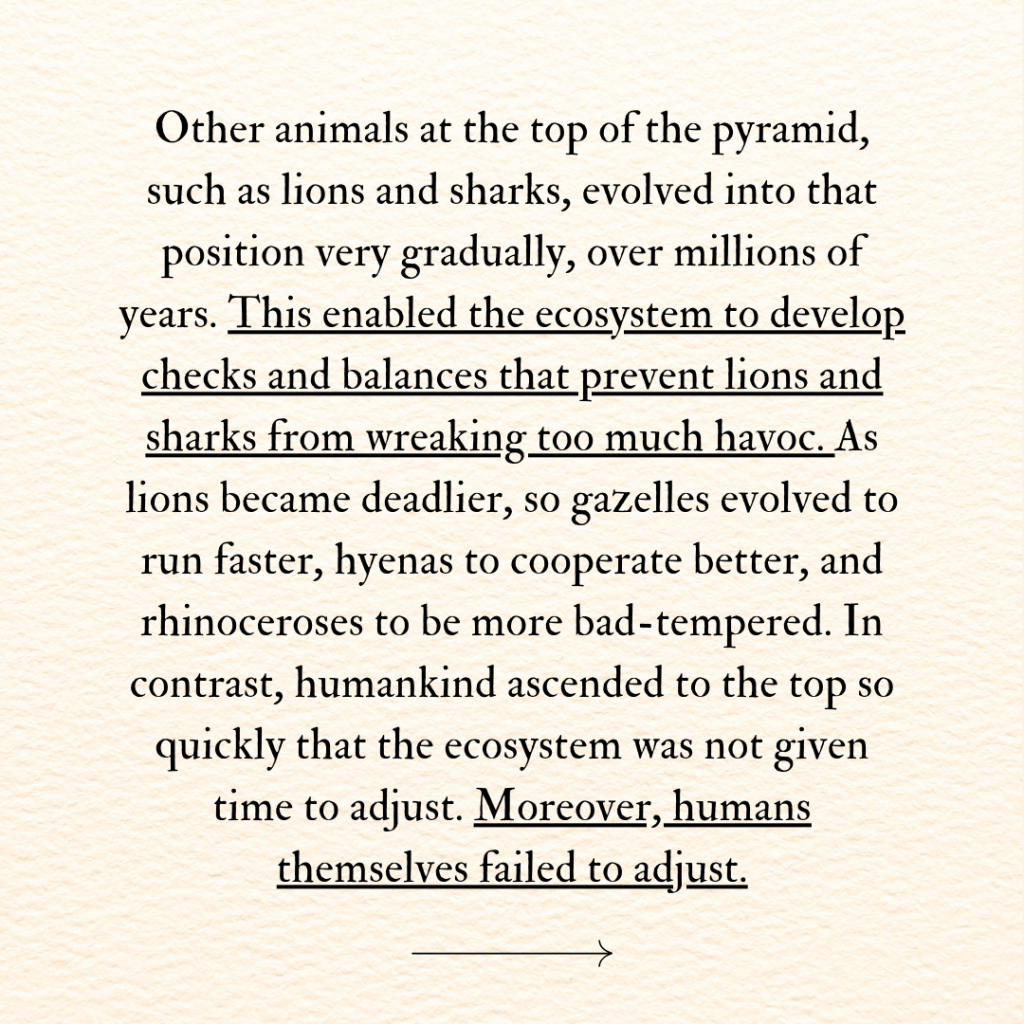
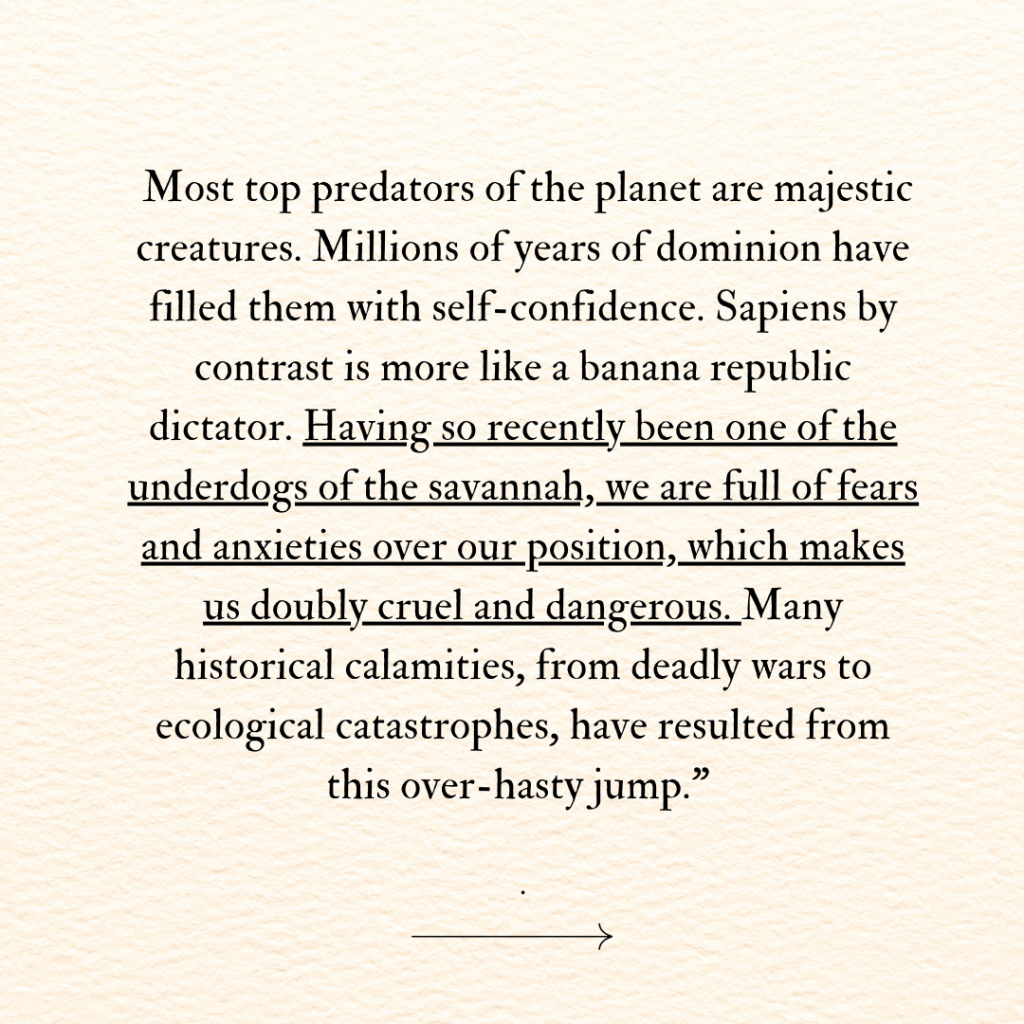
Unlike lions, who took millions of years to evolve into the top predators they are today, we went from dodging sabertooth cats on the plains to running the whole show in the blink of an eye (evolutionarily speaking). And instead of developing the grace and confidence of a species that belongs at the top, we’re absolute nervous wrecks still wrestling with our own fears and impulse-control issues.
At least we have art.
Art is one of the few things that allows us to process our existence beyond raw survival. Utilizing our inherent creativity connects us with each other and with ourselves by both asking questions and digging for answers. We may never find them, but that isn’t the point. Because art isn’t just about the final product: it’s about the experience of creating something and releasing it into the world.
And part of what makes us human is our ability to have that creative experience.
With all of the discussions surrounding AI and its rapid integration into every aspect of our lives, I keep coming back to Harari’s point above. His argument about humanity’s meteoric rise up the food chain is more than just a historical footnote: it’s a psychological blueprint for why we act the way we do.
We climbed too fast, skipped the evolutionary checks and balances, and now, despite being the apex predator, we’re still riddled with insecurity, desperate to prove our dominance – even to each other.
This type of anxiety makes us dangerous, cruel, and – most importantly – reckless.
Don’t believe me? Just take a look at the news and the actions of our “leaders” for evidence. Or just peruse any comment section on any social media app.
I can’t shake this feeling that the way we are “full steam ahead-ing” our use of AI, without thinking about the consequences, is just another sign of that recklessness.
Like our ancestors on the savannah that leapt from prey to predator without developing the wisdom to wield that power responsibly, we haven’t developed the wisdom to handle the power of AI responsibly. We haven’t paused to ask ourselves how to move forward with it so that without causing more harm than good. We just know that 1) we to continue to dominate and 2)we want more.
More power, more money, more dominance, more consumption, more stuff. The ruthless pursuit of more.
In the age of Large Language Models (LLMs), this manifests as a blind rush to flood the world with AI-generated content, sidelining human creativity because it’s slower, costlier, and less “efficient.”
I see a lot online these days about how AI can create an entire movie or a picture or an entire book in a matter of moments, without having to pay a single person to make it. Companies looking at their bottom line are salivating at the cost-cutting that results from indiscriminately dispensing with human talent to increase their stock value. And they are doing it with a total misunderstanding of why people need art – okay, or “content” – in the first place.
Remember, art is a means of expression and of connection. Not a mathematical optimization.
Yes, the power of AI is undeniable. The genie is already out of the bottle on this one and I’m not suggesting that we try to put it back in. In fact, I believe AI to be a transformative tool for business and it may even be a great one for helping to create art! The operative word being “help.” Because AI is just a tool to be used like a word processor or a digital camera or a new paintbrush.
AI can generate more content based on existing data, sure, but it cannot interpret it. It cannot create and it cannot imagine. Those are uniquely human.
That’s the good news.
The bad news is, instead of protecting that which makes us human and creating some guardrails around this technology, we’re steamrolling our very humanity because some guy in a boardroom figured out he can churn out 10,000 AI-generated video clips, flood the algorithm before lunch, and still make it to his tee time.
We need to stop and ask, “What is this costing us?”
If our life is a timeline of choices, relationships, and experiences, then what does it mean when we’re so eager to hand that part sacred of ourselves over to a data server in the desert?
And what for? So we can have a machine regurgitate more content faster so we can consume more of it, faster?
An LLM is a “yes man” who will repeat back to you exactly what you want to hear, but with the words rearranged. It doesn’t challenge you to think a different way or to see things through someone else’s eyes. It doesn’t nurture empathy or compassion. Art does that.
An LLM doesn’t know that it can feel like your guts have been ripped out and your insides doused with acid when a loved one dies. It doesn’t know what it feels like to be overflowing with joy, to be suffering from immense heartbreak, or to fall head over heels in love.
There’s a saying that goes, “A lion does not concern himself with the opinions of sheep.” It’s fitting that the word there is “lion” and not “human”; because, for humans, we absolutely do. As Harari wrote:
Having so recently been one of the underdogs of the savannah, we are full of fears and anxieties over our position, which makes us doubly cruel and dangerous.
It’s not enough for us to be at the top of the food chain. Thanks to our insecurities and fears, we need every other creature below us to acknowledge our dominance.
Again we need to ask, “What is this costing us?”
Every time in history we’ve skipped over the part where we stop, think, and maybe build a few safety nets before sprinting toward the next big thing, it hasn’t ended well. Remember adjustable rate mortgages?
If we don’t get a handle on this, if we don’t recognize that some things—human thought, human expression, human connection—are not meant to be optimized for profit, then we’re going to find out the hard way that being at the top of the food chain doesn’t mean you can’t still fall. Because you can. Hard.
If you take nothing away from this essay, let it be this: You cannot strip away humanity, leave only the tool, and expect art to remain.
After all, it’s not the shoes that perform Swan Lake – it’s the dancer who is wearing them. A filbert brush didn’t paint Starry Night, Vincent van Gogh did. And a typewriter didn’t create The Fellowship of the Ring, J.R.R. Tolkien did.
Just as nature didn’t have time to evolve and create counterbalances for our sudden dominance in the food chain, society hasn’t developed the cultural antibodies to slow the AI-driven erosion of human artistry. And we haven’t yet figured out how to address this over-hasty jump.
Like the ecological collapses thousands of years ago that followed our unchecked rise, there will be consequences here as well. The question is whether we’ll recognize them before it’s too late. Or if we’ll, once again, let our fears make us the most dangerous creatures on the planet.
We are more than apex predators with WiFi. It’s time to remember and to act like it.
 Casey Moeckel
Leave a comment