Like many Millennial and Gen Z women, I recently binged season 2 of Nobody Wants This. I loved season 1. It was sharp, witty, thoughtful, and showed flawed people genuinely trying their best to navigate life, love, and even personal growth. In a world of bloated cinematic universes, comic book adaptations, and space wars, I found this character-driven series to be a welcome reprieve. I couldn’t wait for S2.
It was…not good. I’d say terrible. Really, really terrible. And I think part of the reason it was so bad was that it felt like the show made a sharp pivot from being a character-driven romcom to sponcon (sponsored content) slop.
And when I say blatant sponsored content and distracting product placement, I don’t mean when a piece in a character’s wardrobe catches your eye and you later look it up on WornOnTv.com . “That sweatshirt Joanne is wearing is cute. It looks like Clare V.” [checks the Internet] “Yup, Clare V.”
I mean when an entire episode is written around a Jennifer Meyer necklace and the name “Jennifer Meyer” is uttered more than the name any of our characters.
A bottle of Estée Lauder’s Night Repair Serum is prominently featured not one, not two, but THREE times over multiple episodes; in one of which, the product gets a money shot as our lead character steals some while attending a brisk at someone else’s house and applies it OVER HER MAKEUP (diabolical).
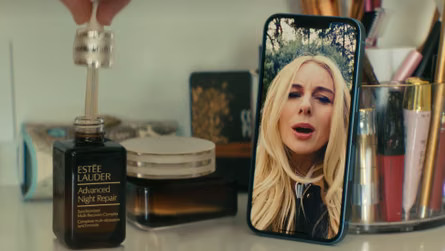
This isn’t a show anymore. It’s a ShopMy page meets a streaming platform.
- Dunkin’
- Jennifer Meyer jewelry
- DoorDash
- AirBnB
- Estée Lauder
- Cheetos
- Seventh Generation
- Fly by Jing chili oil
- Dan Tana’s in WeHo
- Clare V.
Those are just a few of the brands I clocked with prominent product placement this season – each equal parts distracting, confusing, and irritating.
It was like that scene in the Truman Show when Laura Linney, as Truman’s wife, holds up a bag of Mococoa and gives a mini informercial to camera about it when it was…just them chatting in the kitchen alone.
“Who are you talking to?” he asks. Who, indeed.

When sponsored content and brand placement are done so poorly and so sloppily, it takes you out of the story. You know, the story: that thing which got your audience there in the first place. I popped over to Netflix to watch my show, not be force-fed a 10 episode arc of influencer ads masquerading as a “story”.
As someone who built their career in storytelling, I believe that story is still your main currency. I may be biased, but I’m also right.
You know who else built their career on storytelling? Netflix! You could even argue that Netflix invented a new playbook twice over when it came to the distribution and democratizing of storytelling content. It changed the game.
I remember the early days of Netflix when I carefully crafted my DVD queue and a trip to my mailbox replaced schlepping to the Blockbuster on University Place in NYC (RIP). To be honest, I miss Blockbuster and the experience of walking in a video rental shop and browning all the movies, then picking up a box of overpriced Butterfinger bites.
Then they went into original programming. Stranger Things, The Crown, The Queen’s Gambit, House of Cards, Ozark, Dark, The Diplomat, Bridgerton, Mindhuynter, Adolescence, Money Heist…the list goes on and on. The bar Netflix set for authentic, emotionally resonant storytelling is HIGH. It’s also why this kind of poorly executed spon-con stands out so sharply. When you invent the new playbook, I believe you also inherit the responsibility to protect it.
To be fair, advertising has always been part of this medium. It would be naive to pretend otherwise. Product placement and brand ads funded early television, paid for set design, and even helped fund marketing efforts for Spielberg’s E.T. back in the 80s when product placement was still relatively new.
And product placement isn’t necessarily bad. Director Chris McQuarrie has publicly stated that the BMW product placement in Mission: Impossible – Rogue Nation helped pay for some of the big action sequences the franchise was known for.
Other successful examples of brand integration and product placement in storytelling include:
- The Wilson volleyball in Cast Away (2000). Although, in this, Wilson did not pay for the placement. They simply donated the volleyballs used during production when soccer balls weren’t working.
- Nike running shoes in Forrest Gump (1994)
- Ray-Ban aviators in Top Gun (1986) and Top Gun: Maverick (2022)
- Mini Coopers in The Italian Job (2003)
The point is: product placement is nothing new. But there is a limit to how far you can take it without putting your audience off completely.
In the words of LeeAnne Stables, president of Paramount’s worldwide marketing partnerships and licensing at the time of Rogue Nation’s release:
“There’s a tipping point at which the audience will accept [product] integration and still come out of the theater feeling positive about those brands — we’re very sensitive to that and I know our brand partners are.”
– BMW’s ‘Mission: Impossible’ Marketing: Plenty of Racing, No Logo Close-Ups, The Hollywood Reporter, July 31, 2015
Nobody Wants This reached that tipping point.
The difference between smart integration of these products and blatant salesmanship is the difference between a story that pulls you in and one that pushes you away. Nobody wants their entertainment to feel like an aggressive salesman that’s in your face the moment you walk in the door and won’t leave you alone until you finally just leave.
So, before we ever put words on a page, we have to get clear on a few fundamentals
I work in comms and content and I think there are 3 main things you need to clearly know and address in any messaging – be it scriptwriting, copywriting, editorial think pieces, or sponsored content.
- The What: What are you really saying? Do you know? THis is why I think AI won’t replace human writers – it has nothing new or original to say. It can only repackage things that came before. When it comes to ads, every message must feel embedded and its relevance to this moment understood.
- The Who: Who are you saying it to? Who is your audience? The message must speak to what the audience actually cares about, not what the advertiser wants them to care about.
- The Why: Why this product and why now? If the only answer you have for both is “someone’s paying for this,” then you’re doing a crap job. Even a casual viewer notices clunky product placement and is turned off by it. And when that happens, people are pulled out of the story. They’re distracted, they’re cringing, and they’re reaching for the remote. When that happens, your brand takes a major hit when it comes to both integrity and authenticity.
The moment your story starts carrying too many products, it stops carrying any meaning. And audiences care deeply about that.
It’s frustrating when great shows start to feel like over-monetized brand pitch decks. So, whether you’re writing for television or building narratives inside an organization, great writing still requires that you ask: Am I serving the narrative, or just treading water until we get to the next brand integration? When the answer tilts too far toward commerce, creativity starts to erode and you lose your audience.
Shows are already writing for something called second screen viewing – dumbing down shows so they are easier to follow when the viewer is simultaneously on a second screen (i.e. scrolling on their phone).
That feels incredibly sad to me: stories made to be half-watched by half-present people. We can do better.
But I do worry that the era of spon-con slop is upon us. Can we fight it and preserve the medium for actual storytelling? I truly hope so.
Because stories make up the very fabric of the human experience. They are how we make sense of the world, understand each other, understand ourselves, build communities, foster empathy, expand our creativity, communicate our own feelings, share our experiences, and so much more.
In short: stories are how we connect, remember, and make meaning. They’re not commodities, they’re our connective tissue.
And when a show forgets that, when it collapses under the weight of its own brand obligations, audiences will leave. Because especially on Netflix, there’s always something else to watch. And right now, Nobody Wants This. (Heh.)
 Casey Moeckel
Leave a comment